


“AI won’t replace trainers — but trainers who use AI will replace those who don’t.”
It’s a phrase echoing across the fitness industry, and for good reason. Artificial intelligence isn’t here to compete with fitness professionals — it’s here to supercharge them. In today’s coaching landscape, clients expect personalization, measurable progress, and experiences that feel as dynamic as their goals. AI gives trainers the ability to deliver all three at a level that simply wasn’t possible before.
This is the future: human expertise powered by intelligent data.
Why Trainers Aren’t Being Replaced — They’re Being Upgraded
Fitness is fundamentally human. People hire coaches for accountability, connection, education, and motivation. AI can’t replicate that. But it can eliminate the barriers that keep trainers from doing their best work:
- Time spent measuring, re-measuring, and tracking progress
- Guesswork around client adherence
- Inefficient programming built on incomplete information
- Difficulty proving value in a crowded market
- Client drop-off when progress feels “invisible”
AI solves these friction points by giving trainers clarity, consistency, and confidence in their coaching decisions.
AI Turns Progress Into Something Clients Can See and Feel
One of the biggest reasons clients churn is because they can’t see their progress. They lose motivation long before real results show up on a scale. With Visualize Me, trainers can give clients what every human brain craves: visual evidence of improvement.
- “I can see where my waist has tightened.”
- “My legs look more defined.”
- “My posture has transformed.”
AI-driven 3D body visualization makes progress obvious — and when clients see progress, they stay. This turns trainers into retention powerhouses, extending client lifecycles and strengthening long-term loyalty.
Personalization at Scale: AI Removes the Guesswork
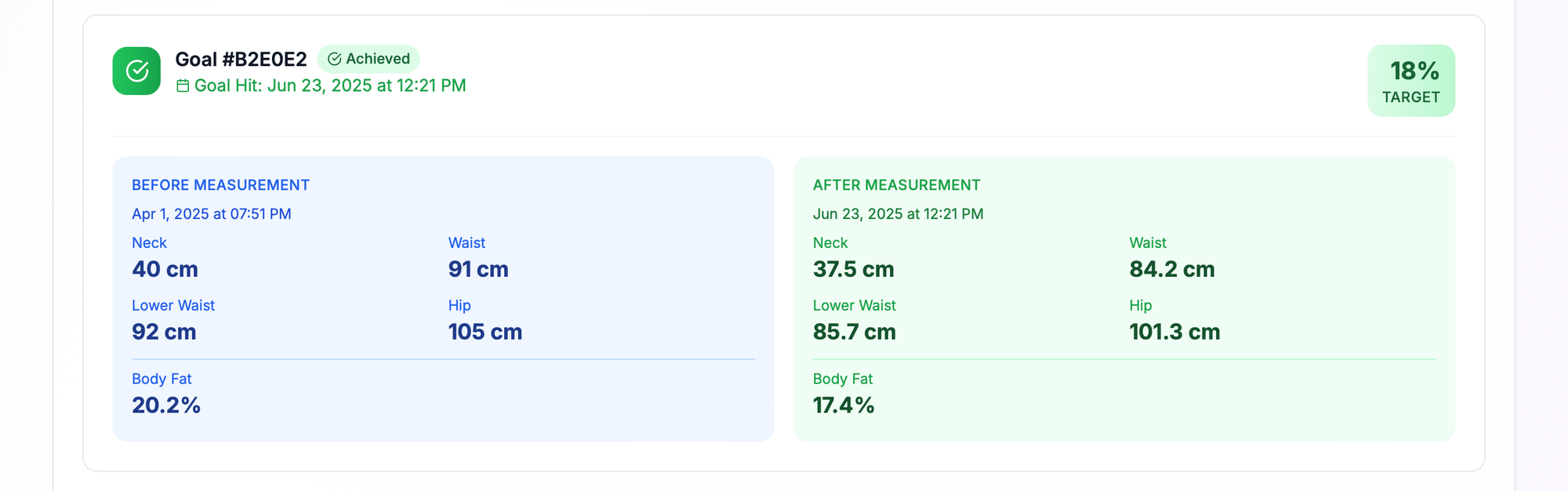
A trainer’s intuition is powerful, but data makes it precise. With AI-generated metrics (body fat %, lean mass distribution, measurements, posture insights, gradual trends), coaches can:
- Build hyper-personalized programs in minutes
- Adjust nutrition and training based on objective data
- Catch setbacks early before motivation dips
- Celebrate small wins clients would never notice on their own
- Tailor training blocks to the client’s specific physique changes
This doesn’t replace the trainer’s role — it amplifies it. AI gives coaches the same advantage top athletes have had for years: real-time, science-backed feedback loops.
Trainers Who Use AI Become the New Standard
Fitness professionals who embrace AI instantly differentiate themselves:
- They communicate with more authority
- They create premium, data-driven experiences
- Their clients feel more supported and more accountable
- They deliver results faster — and with more clarity
- They spend less time guessing and more time coaching
This elevates the trainer’s value — and their earning potential. Clients want a guide who uses the latest tools, not one stuck in outdated methods. This is why trainers who leverage AI rise above the competition.
AI Helps Trainers Retain Clients Longer — and Grow Their Business
AI isn’t just about better training sessions. It’s about better business.
With tools like Visualize Me, coaches can:
- Prove progress visually at every check-in
- Increase session frequency and package upgrades
- Boost referrals through shareable transformation experiences
- Sell higher-ticket coaching tiers using data insights
- Manage larger rosters without sacrificing personalization
Data gives coaches a repeatable, scalable system, not a pile of spreadsheets and manual measurements.
The Future of Coaching Is Hybrid: Human + AI
AI is not a threat. It’s an advantage. It allows trainers to:
- Make smarter decisions
- Deliver more value
- Retain more clients
- Stand out in a competitive market
- Scale beyond what manual coaching ever allowed
Trainers who combine emotional intelligence with intelligent data are the ones who will define the next era of fitness.


