


Validity of a Novel Smartphone-Based 3D Application for Body Fat Percentage Measurement
Trent Yamamoto1 , Eric V. Neufeld2 and Brett A. Dolezal3 1Chobanian and Avedisian School of Medicine, Boston University, Boston, MA 2 Northwell Orthopedics, New Hyde Park, NY and Long Island Jewish Medical Center/North Shore University Hospital, New Hyde Park, NY 3The Fitness Prof, and Airway and UC Fit Digital Health-Exercise Physiology Laboratory, David Geffen School of Medicine, University of California Los Angeles, Los Angeles, CA
Introduction Body composition is a valuable metric for evaluating comprehensive health and fitness, providing insight into acute and long-term responses to dietary modifications and physical activity (Castro et al., 2020). Standard assessments of body composition measure total body mass using a two-category model: fat mass and fat-free mass, which comprises muscle, water, organs, and bones (Holmes & Racette, 2021). Adverse changes in body composition, such as muscle wasting and elevated adiposity, are associated with poor clinical outcomes and higher risks of mortality (Santanasto et al., 2017). Most relevant to public health at the global scale, however, is the development of obesity, which carries significant cardiometabolic risk and is closely associated with downstream health complications (Bray et al., 2018)
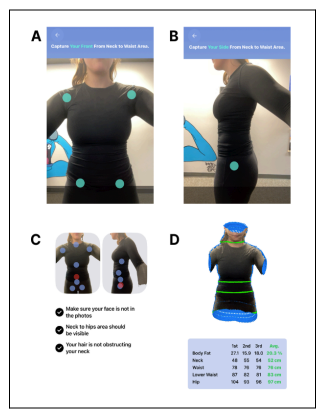
Overall, some of these app-based measurements have shown relative agreement with traditional methods, including DXA and BIA. However, given that these platforms are still in their nascent stages, further validation is necessary to ensure their accuracy. This present study assesses the accuracy and validity of Visualize Me (Visualize AI Technologies, Inc., New York, New York), an application that uses depth mapping and infrared scanning for detailed body composition analysis, against criterion-BIA measurements.
Methods Participants Eighty-eight apparently healthy participants (60 male, aged 20.1 ± 1.1 yrs; BMI 23.2 ± 1.2 kg/m2 ) within the surrounding community of University of California, Los Angeles volunteered to participate in this study.
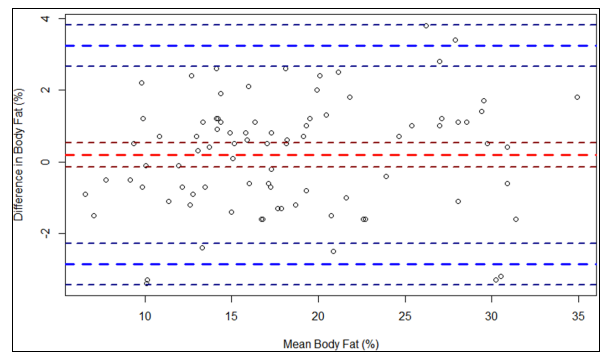
Results Shapiro-Wilk tests demonstrated that both distributions deviate significantly from normality. Spearman’s rank correlation coefficient was calculated due to non-normal distributions, resulting in 0.92 (95% CI: 0.88, 0.95), indicating a very strong correlation between the two BF% measures. The bias observed between the two devices (Figure 2) was 0.2% (95% CI: -0.1, 0.5) with LoA spanning from -2.9% (95% CI: -3.4, -2.3) to 3.2% (95% CI: 2.7, 3.8).
Conclusion The Visualize Me application is an accurate and user-friendly tool for evaluating body fat percentage. Furthermore, due to the application's advanced ecological design, it requires minimal resources to function effectively at virtually any location. It delivers immediate and precise body fat percentage measurements using proprietary depth mapping and infrared scanning technologies from the smartphone camera.
Full Report Download:
Hip Waist Ratio Accuracy Validation
Waist–hip ratio (WHR) is an established anthropometric indicator of central adiposity and a strong predictor of cardiometabolic risk. Unlike body mass index (BMI), WHR reflects visceral fat distribution, a key driver of insulin resistance, chronic inflammation, and metabolic dysfunction. Elevated WHR is independently associated with increased incidence of type 2 diabetes, cardiovascular disease, stroke, hypertension, dyslipidemia, and all-cause mortality, even among individuals with normal BMI. Despite its clinical relevance, WHR remains underutilized in routine health assessment. Increasing public and clinical awareness of WHR offers a low-cost, noninvasive method for early detection of metabolic risk and can support targeted preventive interventions. Broader adoption of WHR could enhance population health strategies by shifting focus from weight-centric metrics to body-fat distribution, thereby improving risk stratification and long-term health outcomes.
Introduction Waist–hip ratio (WHR) is a clinically recognized marker of cardiometabolic risk and an essential metric for understanding population-level health. This report presents the accuracy validation of the Visualize AI mobile application in estimating WHR using single-shot smartphone imaging. Our objective is to assess the reliability, precision, and population-level applicability of this method, enabling large-scale, low-cost monitoring of a biomarker strongly tied to metabolic disease, cardiovascular outcomes, and public health risk stratification.
Accuracy Validation Conclusion for Hip–Waist Ratio
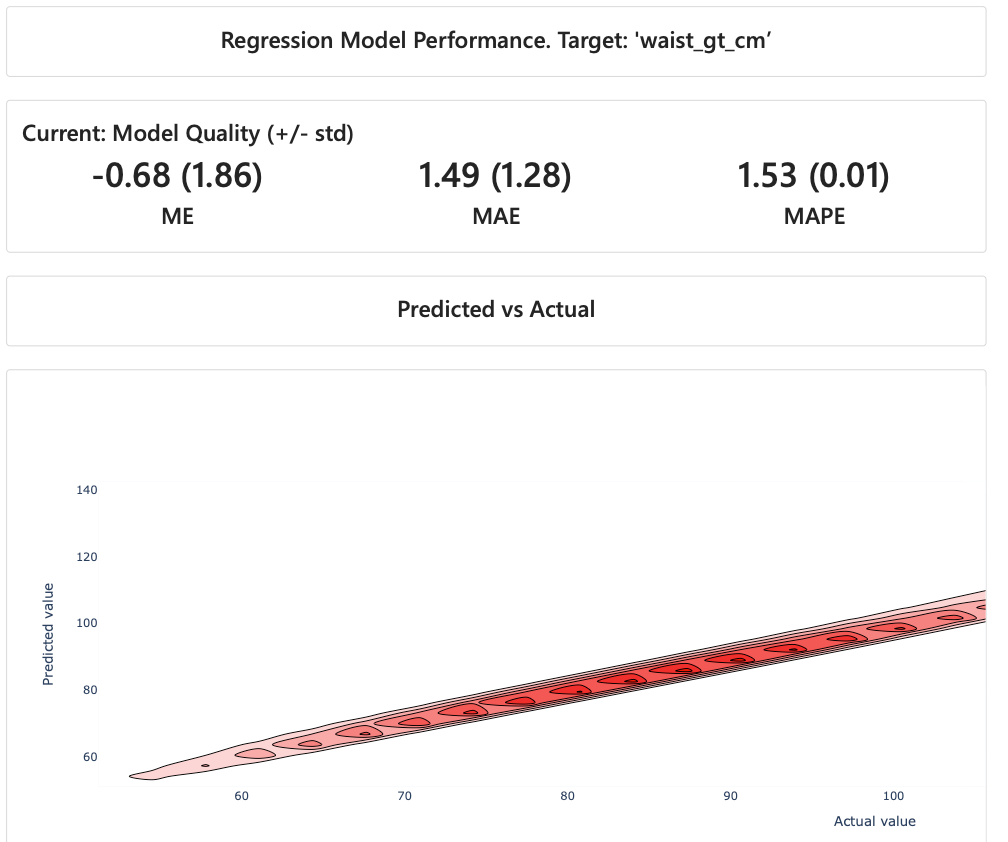
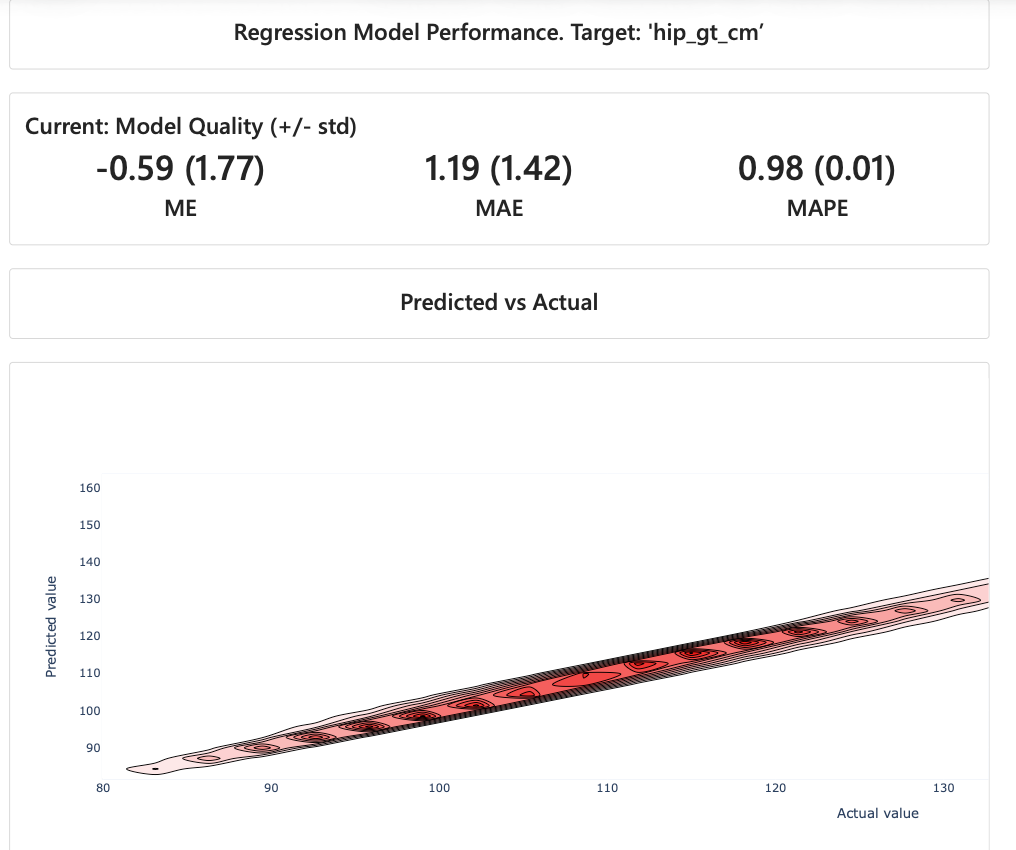
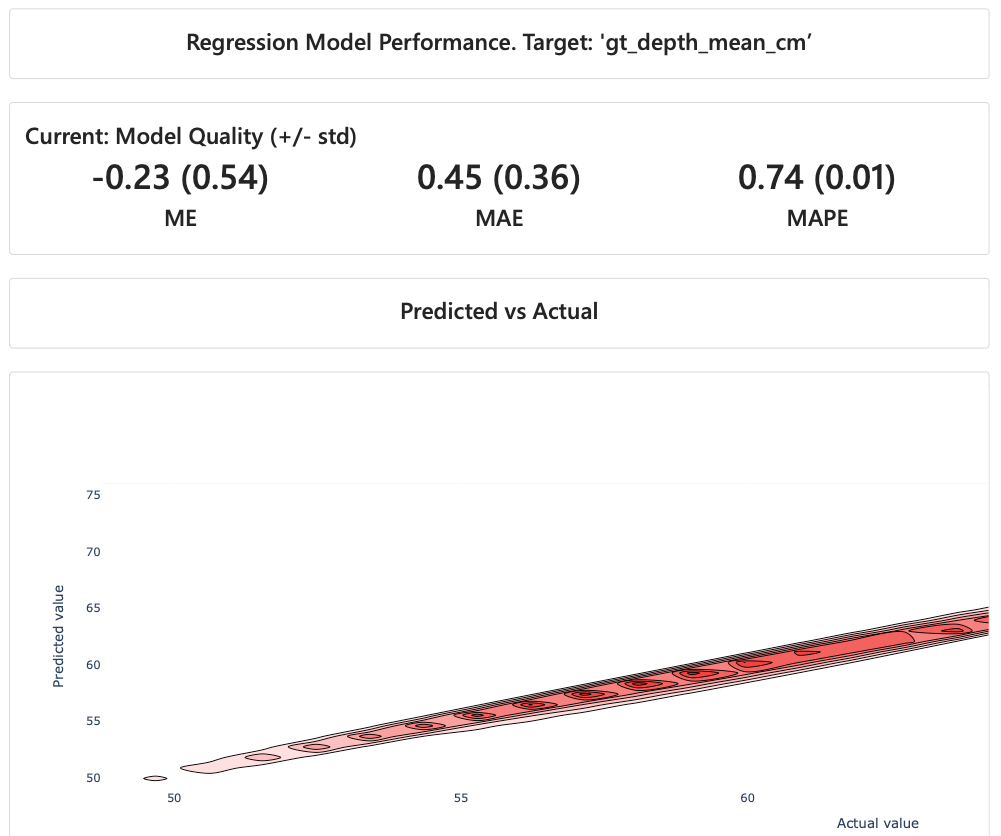
The accuracy profiles for both waist girth and hip girth models demonstrate low mean error, stable variance, and consistently low absolute percentage error, supporting the reliable derivation of Hip–Waist Ratio (HWR) from these predictions.
The waist model reports a mean error (ME) of –0.68 cm with MAE 1.49 cm and MAPE 1.53%, indicating minimal systematic bias and high measurement fidelity across the distribution. Similarly, the hip model exhibits an ME of –0.59 cm, MAE 1.19 cm, and MAPE 0.98%, demonstrating even tighter error bounds. In both models, 90% of samples fall within narrow error bands, with under- and over-estimation confined to the expected extreme-value tails. Error–normality plots show no pathological deviation from approximate Gaussian behavior, suggesting stable generalization.
Because HWR is a ratio of two independently well-behaved regressions, the propagated error remains small. With both waist and hip errors centered near zero and standard deviations contained within ~1–2 cm, the resulting HWR is expected to have high numerical stability, with error propagation well below the thresholds typically considered meaningful in clinical or fitness-screening contexts. No evidence of compounding bias is observed, and the symmetric error structure across both measurements further supports ratio reliability.
In conclusion, the validation results indicate that the system provides a scientifically robust and operationally reliable estimation of Hip–Waist Ratio, suitable for population-level analytics, longitudinal personal tracking, and downstream health-risk classification. The low-bias, low-MAPE characteristics of both underlying models support the use of HWR as a trustworthy derived metric.
Full Report Download:


